
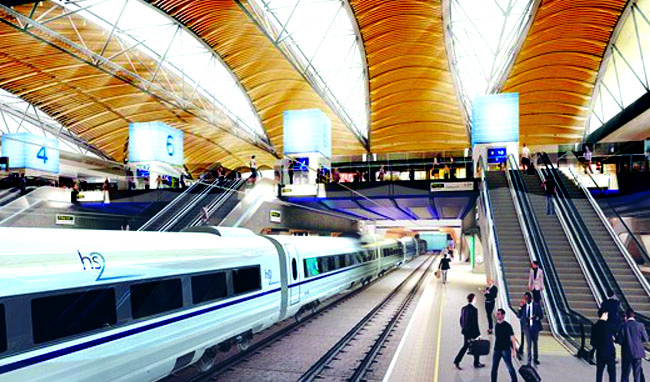
The debate over HS2 is coming rapidly to a head and threatens, with as many supporters as detractors, to become as divisive as Brexit. The leaked Oakervee Report and the recent report from the National Audit Office seem to agree that the original approach to costing the project was flawed and, if it proceeds, the process of cost control henceforth must be much tighter.
Our West Midlands Mayor, the weekend before last joined on a cross party basis with the Mayor of Greater Manchester, Andy Burnham, and the leaders of Leeds City Council and Nottingham County Council, to press for a green light on the development. They were unanimous in the view the future economic success of the Midland and North of England depended on it.
The press today speculates that Sajid Javid, as Chancellor and holder of the national purse strings, is about to come out in favour.
Meanwhile, the removal of the Northern franchise and threat that the same fate may await the equally failing Trans Pennine service has turned the spotlight on the underinvestment in rail infrastructure in that region that those operators share and is generally blamed more than the operators themselves. The calls for investment to be diverted those cross Pennine and north eastern routes come from loud voices.
But what are we to think?
I was very struck by the Knowle Society’s guest speaker last Monday night. A B93 resident and highly respected former senior manager and consultant in the rail industry, he was asked about HS2 during the questions session that followed his talk. He was unequivocal, saying that the existing lines had been running to full to capacity for some time. New tracks are needed and if they are to be proved, they should be built to run at high speed and high capacity to meet the needs of the future.
For me, the needs of the future are clear cut:
- The wellbeing of a local population is directly related to economic prosperity of the area, which, at present, declines the further north you go. To create more wealth and jobs, world class transport links are vital. London and the south east have these, the West Midlands has to an extent, the North West to a lesser extent and the North East even less so. That needs to be fixed.
- We need to divert more internal long distance journeys, including freight movements, in the UK from our motorways back to rail in response to concerns over climate change and air pollution. A significant step change in rail capacity and performance is needed to achieve that.
Accordingly, now is the time for the UK, which noticeably lags behind many in the developed world with our public transport, to invest for the future, build a high performing, fit for the future rail network.
It is not a choice between building HS2 between the main cities or delivering improvements to existing services, we need to do both, so that a new high speed network frees up capacity on slower, but still high quality, connecting services. All this needs to be done in a clearly planned and articulated strategic manner with tight cost controls.
More money may need to be found and the answer to that is straightforward to my mind as well – divert it from motorway developments and, in particular, the proven to dangerous smart motorway upgrade programme.
I agree wholeheartedly with Andy Street, we are prevaricating too much over HS2. We need it, we must get on with it, but we must get it under control and do it right.
Equally, as someone who in the few years has ‘enjoyed’ travelling on Northern and Trans Pennine services in the north east a few times, I can attest to how grim they are and to how high a priority parallel improvements there should be.