
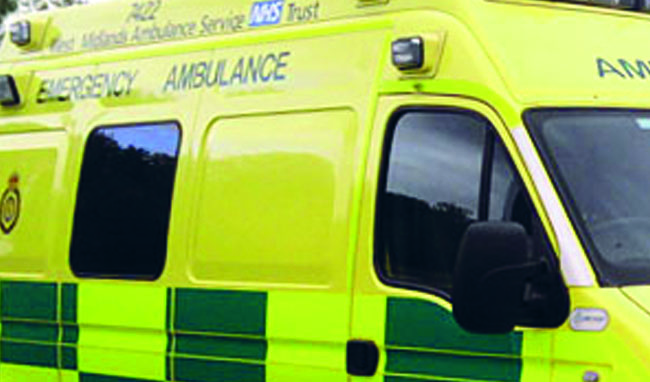
So, the community is being encouraged to ‘fear’ the closure of Solihull ambulance station. But, should we?
Frankly the bird has long flown the nest. The real story was back in Autumn 2013, when the actual Solihull Ambulance Station in Hermitage Road closed its doors.
The so called Ambulance Station at Solihull Hospital is not really worthy of its name. It is a parking place for three ambulances and a bit of a welfare station for personnel.
Is there more there than a microwave, kettle and a few lockers? Can it be called an Ambulance Station when the vehicles cannot be kept clean and hygienic there, can’t be refuelled there, cannot be re-stocked there because there are no stores for vital consumables as there would be at a proper Ambulance Station?
The West Midlands Ambulance service is suggesting that there will be no loss of performance by stationing the three ambulances in Erdington rather than Solihull because the vehicles currently have to go back to Erdington frequently in order to be ‘serviced’ in any case. So, would it be better to save the cost of sustaining the facility at Solihull Hospital and divert that resource into additional personnel and vehicles? Quite what impact the change will have on the effectiveness of the fleet, and whether it will be positive or negative, is impossible for the outsider to tell.
However, those running the service have modelled it and believe that the money can be better spent. And, given that the latest Ambulance Service Performance Report shows the West Midlands service as either the top or second performing in the country for its response times in the five different call categories, we might be tempted to think that they know what they are doing.
For me, the kicking up of a sandstorm about this ‘closure threat’ is alarmist and unhelpful and it is unsurprising that the public will be concerned without any clarification of exactly what is being closed and what the real effect will be.
Of course Solihull would be better off if we still had a proper, fully functioning ambulance station with full servicing facilities and a dedicated fleet of our own. But that horse bolted its stable door over five years ago.
In the face of rising call rates to an increasingly elderly population and from a rising tide of violence and drunkenness in the night time economy, the ambulance service used modern technology to eliminate the need to operate on a ‘return to base’ model and keep its resources on the road moving from call to call. The move to larger, centralised hubs, such as at Erdington, allowed the fleet to be efficiently and regularly serviced by dedicated and high performing teams of logistical support staff in order to allow paramedics and other crew to concentrate on meeting demand in the community.
Could the service be better? Of course it could. Every service everywhere could be better. An ambulance permanently waiting at the end of every road would be ideal, after all.
But, let us not get worked up about the current closure. As a former Board Member of Healthwatch Solihull, I rest easy in my own bed knowing that what is being lost at this stage is not worth fretting over. We need rather to keep monitoring performance and hold ambulance bosses to account should it slip.